Home › Web Design › Landing Page Structure and Sections Explained
Landing Page Structure and Sections Explained
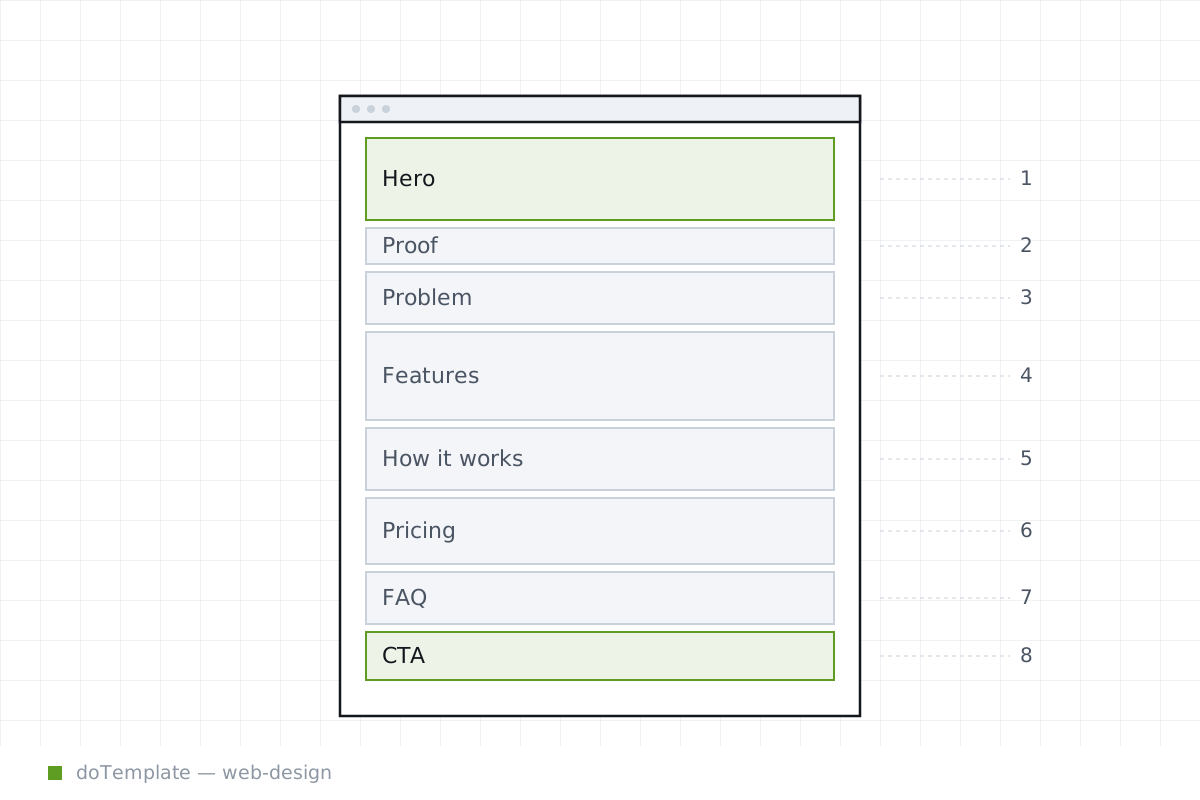
Creating a high-converting landing page is straightforward when you know the essential sections. The most effective layout follows the visitor's decision-making process, moving from promise to problem to proof to the close. While the sections can be reordered if needed, a typical landing page structure includes five to seven core blocks. Let's review each one from the top.
In this article
Hero
The position and purpose of this section are clear: the hero is the promise plus a call to action, placed above the fold for every visitor. A successful hero unites three key elements: the visitor's pain point, the solution your landing page offers, and the next step to take. In other words, you must say:
Who: This landing page is for you, target audience.
What: You have problems with pain point, but we offer solution.
Why Now: Click here to learn more or sign up now.
Social Proof Strip
Do visitors need to trust you before doing any work on the page? If so, a social proof strip is the right choice. This section sits directly below the hero to boost credibility before the visitor has to read the rest of your pitch.
A social proof strip typically includes client logos, a review score, or one strong testimonial. It preempts doubts and builds trust.
Problem / Stakes / Value
This core section comes next for a reason: you need to state the problem before offering the solution. The "stakes" section should start with a single question, a symptom of the pain, or a negative scenario.
Then, show the consequences: phrase the outcome in stark terms. End by framing the solution as a benefit, or how your product resolves the earlier problem.
This section has key copy elements:
Problem leads to stakes, but the product delivers benefit. Bulk of staked copy [Transition sentence:
But where old solution fails, our product does key function...
Solution / How It Works
This is where you show what your product does, and how it does it, so visitors can quickly evaluate the fit and take the next step. A solution section has two key goals: 1) display the main features, 2) explain them as benefits.
Limit your claims to the most important points and display them cleanly, so readers can scan and decide.
Proof
Visitors have your promise and they see how it solves their problem, but will they believe it works?
The proof section answers the question with evidence: detailed testimonials, specific results, screenshots, and case studies.
Objections / FAQ
What objections looms in the visitor's mind as they reach the end of the page?
The objections section answers visitor doubts and clears friction.
It may include:
- A sign-up FAQ
- Buyer objections (so that people feel their concerns are addressed, without including the objection itself)
- Pricing table
- Refund details
The section length depends on your product. For some products, it may be a deep FAQ with a dozen entry points; for others, one or two common objections suffice.
Final CTA
Now that visitors have seen your offer, read your proof, and imagined their outcome, the closing CTA drives home the message.
A subtle but important point: the final call to action has less closing pressure.
Footer
The footer is the landing page's final impression.
Include only these elements:
- Links: Privacy policy, terms of service, and contact info
- Optionally, a repeated CTA
- A minimal nav menu (like "home", "about", or "FAQ")
Optional Sections
Additional blocks can strengthen a landing page, but remember: you must prioritize clarity and reduce any distraction from your main conversion goal. For example, a quiz, calculator, or comparison table may help, depending on your product and customers.
Common mistakes
A strategic trap for new landing pages: treating the page like a homepage. In contrast, a focused landing page has a clear message, one goal, and minimal distractions.
Takeaways
Landing pages do not need to be long or complex to convert. A high-converting landing page combines just five to seven blocks that borrow natural sales techniques. The sequence is important, but the core elements can be reordered to fit your offer and audience.
Blocking step by step, from the promise to the close, creates a persuasive narrative. By mirroring your visitor's process and framing each block around their experience, you captivate their attention and drive conversion.