Home › AI & Tools › THE ULTIMATE DECISION ON AI WEBSITE BUILDERS
THE ULTIMATE DECISION ON AI WEBSITE BUILDERS
AI website builders offer different levels of handoff between machine and human. Most users default "AI website builder" for all code-based AE tools.
In this article
Every AI-driven site is either code-exportable, content-portable, or coded for hosting internal to the vendor’s platform. Three types of builds mean the choice determines the execution legwork left to the user.
Three builder types, three handoff points
These AI-generated websites fall into three categories:
- Built without code, automatically hosted, like Framer.
- Method-driven on own hosts, as is Wix.
- Code-generative, for ready export.
The hosted sites integrate AI-generated content with vendor content management systems instead of HTML, CSS, JavaScript, and static asset publications. Conversely, code-generative, too, resolves the files for migrations, but alongside speech and dynamic adaptation, beyond static data.
A Framer site totally gets self-contained as HTML, CSS, JavaScript, and static assets inside Framer's hosting. You cannot download a zip file for use with another host. Consequently, Wix publishes its builder’s work to its platform. You retain ownership of AI-generated site assets you select, but still, you cannot necessarily use them if you quit the platform.
Hosted output: what you get, and what stays behind
Framer and Wix reflect a common AI builder split: choices in where their outputs land.
Framer publishes sites to its own/necessary hosts, but does not provide an HTML export for transfer. Likewise, Wix requires its creators to operate inside Wix for maintaining their work. Neither provide full HTML exports, so a site published in either platform is not something you can then move to a different host.
For example, a Framer community post from its support confirms Framer does not offer an export to generated code. Wix via a third-party observation of export challenges agrees it does not export code or produce HTML, CSS, and JavaScript. Export, they both point out: you can pull the content, such as posts, products, and form submissions, but the design leaves for them to keep when you leave.
AgentSite says you also cannot necessarily complete migration exports. Wix exports data from collections like products, contacts, and form submissions into CSV, AgentSite adds. Furthermore, images are referenced using URLs, instead of collectively. They are a platform-specific portability limitation.
Accessibility and semantics are still manual work
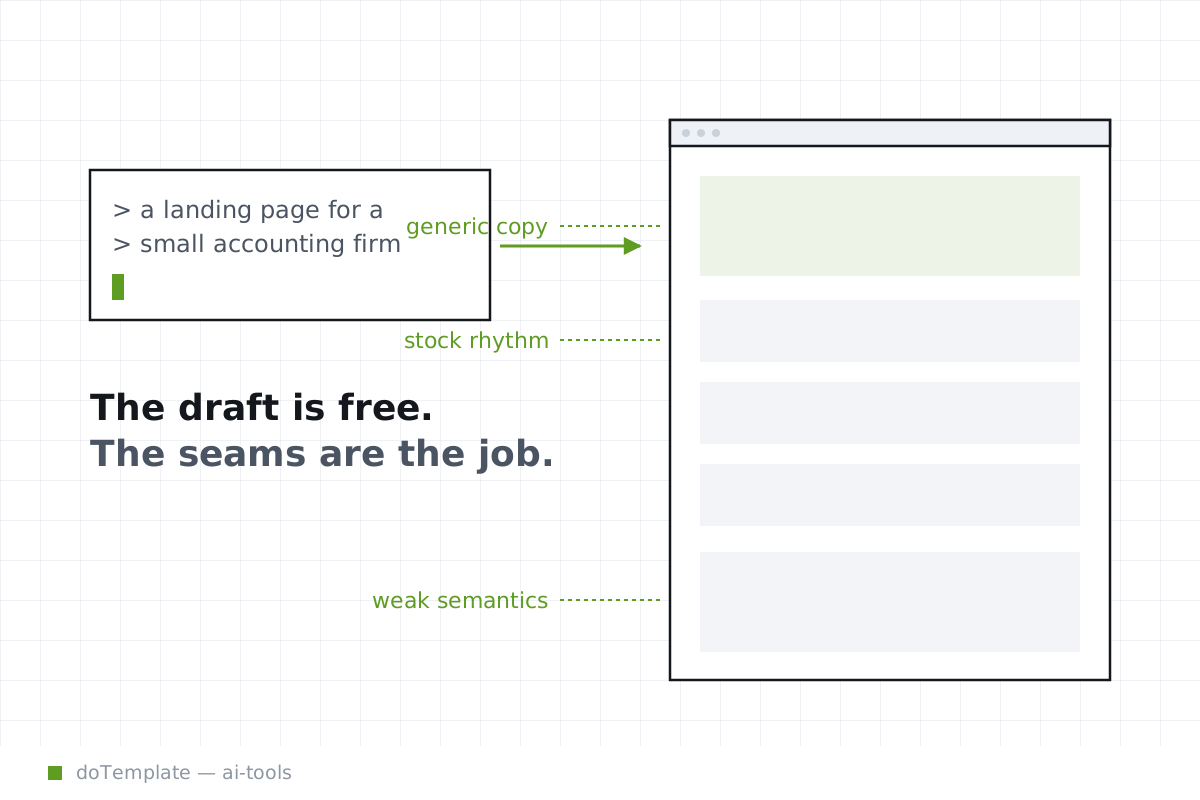
Even AI craftsman sites still require manual accessibility and content work. This persistent need balances out the utility these platforms offer for automatic generation.
Creating accessible sites requires deliberate human testing, categorical writing, manual checks, and conveyance of purpose. It is not something AI’s inherited skills can generate perfectly.
Framer highlights accessibility importance by suggesting to build sites natively as you go. According to a 2026-07-03 guidance post, Framer highlights accessibility as something manual and deliberate. To its team, accessibility depends on headline usage, SVG logos, brand comparison, shared asset, alt-text image, visual keyboard navigability, focus visibility, and motion execution reduced-motion. Framer also says to run an automated checker before you manually finish your entire site through visual, keyboard, screen reader, or screen zoom testing.
This guidance from Framer carries weight, updates recently, including as late as 2026-07-06. The accessibility manual underscores Framer’s explicit advice in its 2026-06-02 post. Framer says its platform provides user controls for headers, color, keyboard, and motion, which are necessary for accessibility and usability.
These deliberate, specific performances underline the manual finish you need when deploying even AI-generated AI sites for work.
What portability actually means
With services, many people consider “portability” interchangeably, but sets actually has three meanings: content, code, and full site ownership. Understand the difference between these three.
In practical terms, AI-generated and hosted sites mean you may export content, but not the actual code, design, or full website.
So consider: code portability means you can migrate a site where you want, with the code running it exactly the same. Content portability means you can lift the words, images, and other content from the platform, but possibly cannot move the code behind it, like HTML, CSS, JavaScript, or design.
Framer makes its built sites portable via content export, but not code. Framer maintains you are the owner of a site you commission from it and the host for it. Wix maintains site ownership for its users, but locks down sites with the 2024-12-19 post by Wix help.
These platforms reflect what you can expect in portability even in a best-case scenario: content travels, although you cannot necessarily lock the design, or the code, or the site base.
Handling a site from an AI builder that locks out export means serving inside their respective hosting.
Practical handoff: where humans still have to finish
Practical work on AI-built sites goes beyond starting with them. Stay online for these handoffs.
Run the following checklist:
- Content. Proof the AI-generated text. The output still needs proofreading.
- Semantics. It is for affordable, accessible content; however, try AI tools for HTML and study images with alternate text.
- Navigation. For checking the easy move from AI tool people to site pages.
- Device Testing. You should inspect mobile sites are responsive.
- Browser Testing. Upgrade your AI site. React to browsers.
- Performance. AI builds mostly fail to sophisticated performance rendering. Trade-offs in AI technology persist until improvements are made.
The generated sites are not instantly accessible or portable, but you can eventually add those finishes. Manual checking and a human touch still keeps AI-generated content proofed, updated, and portable today.